
Table of Contents
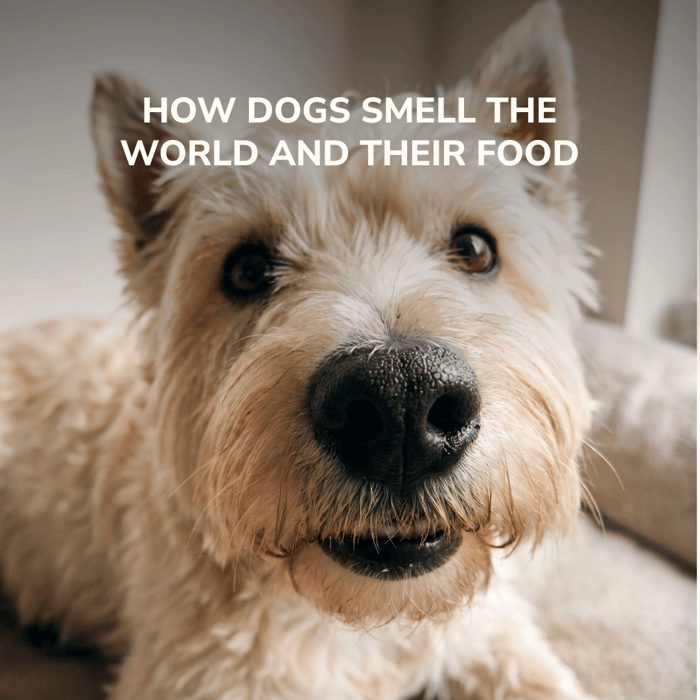
For dogs, scent is information, memory and anticipation. It is also where every meal begins.
My little Westie Max knows that I am coming long before I reach the door. At home, he may be four floors above the street, yet he starts barking while I am still approaching the building. I always wonder: has he caught the faintest trace of my scent in the air?We live beside dogs while inhabiting very different sensory worlds. Humans tend to organise experience around what we can see. Dogs understand a much larger part of their world through what can be smelled.
A lamppost is not simply a lamppost. A patch of grass is not empty. The hallway outside an apartment, the air beneath a kitchen door and the place where another dog paused hours earlier can all contain information: who was there, what happened and how recently the scene changed.
A nose built to discover
When a dog stops during a walk and spends what feels like an eternity examining one small area of pavement, we may see a delay. The dog may be reading an entire story.
To us, sniffing can look repetitive. To a dog, each inhalation refreshes the sample, allowing the brain to compare what has changed from one moment to the next.
Their nose has been beautifully designed for this purpose. During active investigation, dogs may sniff four to seven times each second, gathering a succession of tiny scent samples. Each nostril samples separately, helping the dog work out where an odour is coming from.
Inside the nose, the incoming air separates. Some continues towards the lungs, while another portion is directed into a specialised area devoted to smell. There, odour molecules meet olfactory receptors, which convert their chemical presence into electrical signals. Those signals travel to the olfactory bulb and onwards to parts of the brain involved in recognition, memory, emotion and behaviour.
This is how the brain transforms invisible scent molecules into meaningful information.
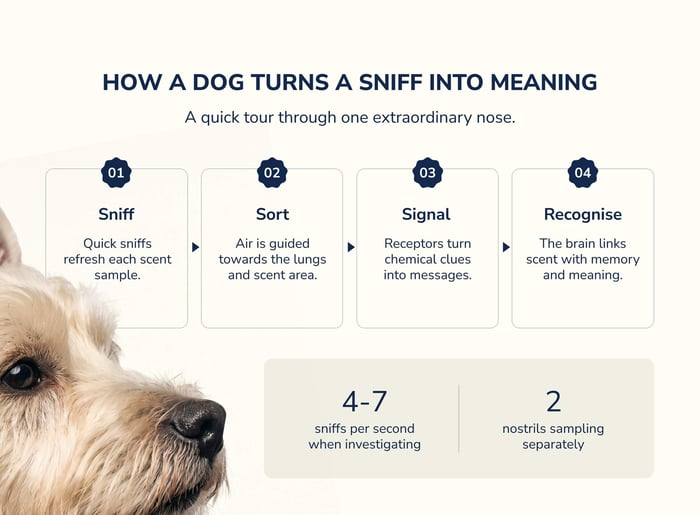 Figure 1. A dog gathers, sorts and interprets scent information with every active sniff.
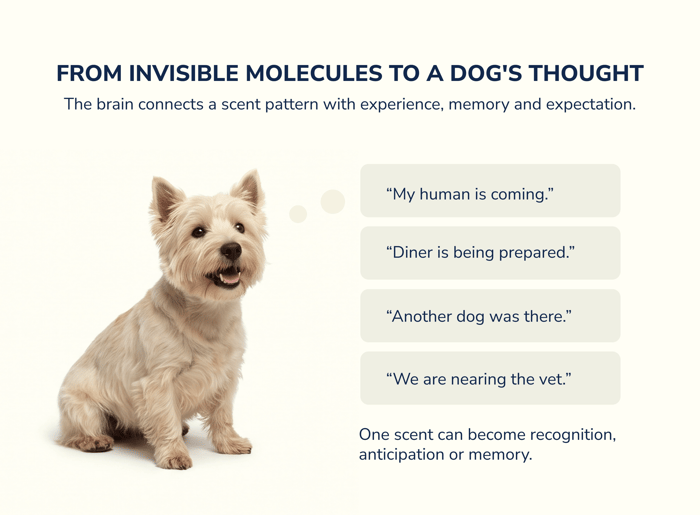 Figure 2. The brain connects scent patterns with experience, memory and expectation.
Can dogs smell time
Odours are never static. They disperse through the air, settle onto surfaces and gradually fade. Temperature, humidity, sunlight and air currents all influence how long they remain and where they travel. A place therefore smells subtly different as time passes.
Canine-cognition researcher Alexandra Horowitz has proposed a fascinating possibility: dogs may learn to interpret the fading strength of familiar smells as a form of temporal information. As their human's scent diminishes during an absence, a dog might associate a certain stage of fading with the time they usually return.
The nose arrives at the bowl first
Long before a dog tastes a meal, the nose has already begun to explore it.
Aroma announces the ingredients, recalls previous experiences and signals whether something is familiar or new. Once eating begins, smell combines with taste, temperature, texture, moisture and mouthfeel to create the complete sensory experience.
This is why dog food should be created with respect for the extraordinary sensitivity of the canine nose.
When I created LOONAWELL six years ago, respecting the extraordinary sensitivity of the canine nose was one of my most conscious formulation decisions.
A dog's olfactory system can detect and distinguish chemical information at concentrations far beyond our own perception. It made little sense to me to begin with beautiful, high-quality ingredients and then cover their natural aromatic identity with added flavours or fragrances.
This is why LOONAWELL's recipes contain neither. Their aromas come from the organic, human-grade ingredients themselves: meat, fish, vegetables, fruits, herbs, mushrooms and other carefully selected foods, each included with a positive nutritional purpose.
Real food has aroma. From the beginning, I wanted every LOONAWELL recipe to smell like what it truly is - and to give each dog the freedom to discover it.
A pause is not a verdict
When a dog hesitates before eating something unfamiliar, we often assume they do not like it. Yet hesitation can also be investigation.
I still remember the first time my little Westie Max smelled our Golden Shield pâté. Although I regularly cook for Max and Luna and expose them to a variety of whole foods, he had never encountered shiitake mushrooms or oat beta-glucan before. The aromatic composition was completely new to him.
Max smelled the pâté. He paused. Then he walked away.
It would have been easy to decide that Max did not like Golden Shield. But a little later, he returned. He investigated it again and chose to eat it. Today, it is one of his favourite LOONAWELL pâtés.
His first response was not a verdict. It was curiosity unfolding at his own pace.
A single pause in front of an unfamiliar food does not necessarily reveal a permanent preference. Dogs may eat more slowly, become distracted or hesitate when first encountering a novel recipe. Familiarity can change the experience. Persistent refusal or an unusual loss of appetite should, of course, never be ignored - but sometimes a dog simply needs the freedom to discover.
Put it to your dog's test
The LOONAWELL Discovery Pack brings together all six of our organic pâtés in individual 60 g tubes, each with its own ingredients, aroma and sensory story.
Offer them one at a time, in a calm and familiar place. Then watch the nose before watching the bowl.
Does your dog approach immediately? Sniff rapidly? Pause, lick, look away or return for another investigation? Does the response change during a second encounter, once novelty has begun to become familiarity?
Your dog may reveal an immediate favourite. Another recipe may become meaningful more gradually, just as Golden Shield did for Max.
There is no universal answer and no correct favourite. Your dog's nose, memories and preferences belong entirely to them. The Discovery Pack simply offers six delicious opportunities to watch those preferences reveal themselves, and to accompany your dog on a culinary journey led by the most extraordinary nose in the room.
Pack Découverte

CHF. 58.90
Six patés. One very happy dog. The LOONAWELL Discovery Pack brings together all six of our organic dog patés in individual 60 g tubes. Made in Switzerland for tasting, topping, treating, travelling and gifting.… Read More
FAQ
Why is smell so important to dogs?
Smell helps dogs recognise individuals, explore their surroundings, locate food and connect experiences with memories and emotions. While humans tend to understand the world visually, dogs gather much of their information through scent.
How powerful is a dog’s sense of smell?
A dog’s olfactory system is far more sensitive than ours, although its performance varies by breed, age, health, experience and the particular substance being detected. Dogs can perceive and distinguish scent information at concentrations far below human perception.
How does a dog sniff?
During active investigation, dogs may sniff four to seven times per second. Each nostril samples scent separately, while specialised structures inside the nose guide odour-rich air towards millions of olfactory receptors. These receptors transform chemical information into signals the brain can interpret.
Can dogs smell their humans approaching?
They may detect faint traces of a familiar human’s scent carried through the air. Dogs can also combine smell with footsteps, voices, vehicles, household routines and other familiar cues to recognise someone before they become visible.
Can dogs smell time?
Researchers have proposed that dogs may interpret the gradual fading of familiar scents as a form of temporal information. A dog might learn to associate a certain strength of their human’s remaining scent with the time they usually return. This remains a fascinating hypothesis.
Does hesitation mean my dog dislikes a new food?
Not necessarily. A pause may be part of investigating an unfamiliar aroma, ingredient or texture. Give your dog time to smell, step away and return without pressure. Persistent refusal or an unusual loss of appetite should, however, be discussed with a veterinarian.
Why does LOONAWELL use no added flavours or fragrances?
LOONAWELL recipes are created to respect the extraordinary sensitivity of the canine nose. Their aromas come from organic, human-grade ingredients, allowing each recipe to retain its own natural aromatic identity and giving dogs the freedom to discover it.