
Table of Contents
Can My Dog Eat Chestnuts?
Roasting chestnuts have a way of making the kitchen feel like autumn. And if a hopeful little face appears beside you while you peel them, it is only natural to wonder whether you can share.
“Can my dog eat…?” is one of those questions I ask myself almost every day. And as a scientist, I always like to take a step back and understand the ingredient itself before sharing it with my dogs.
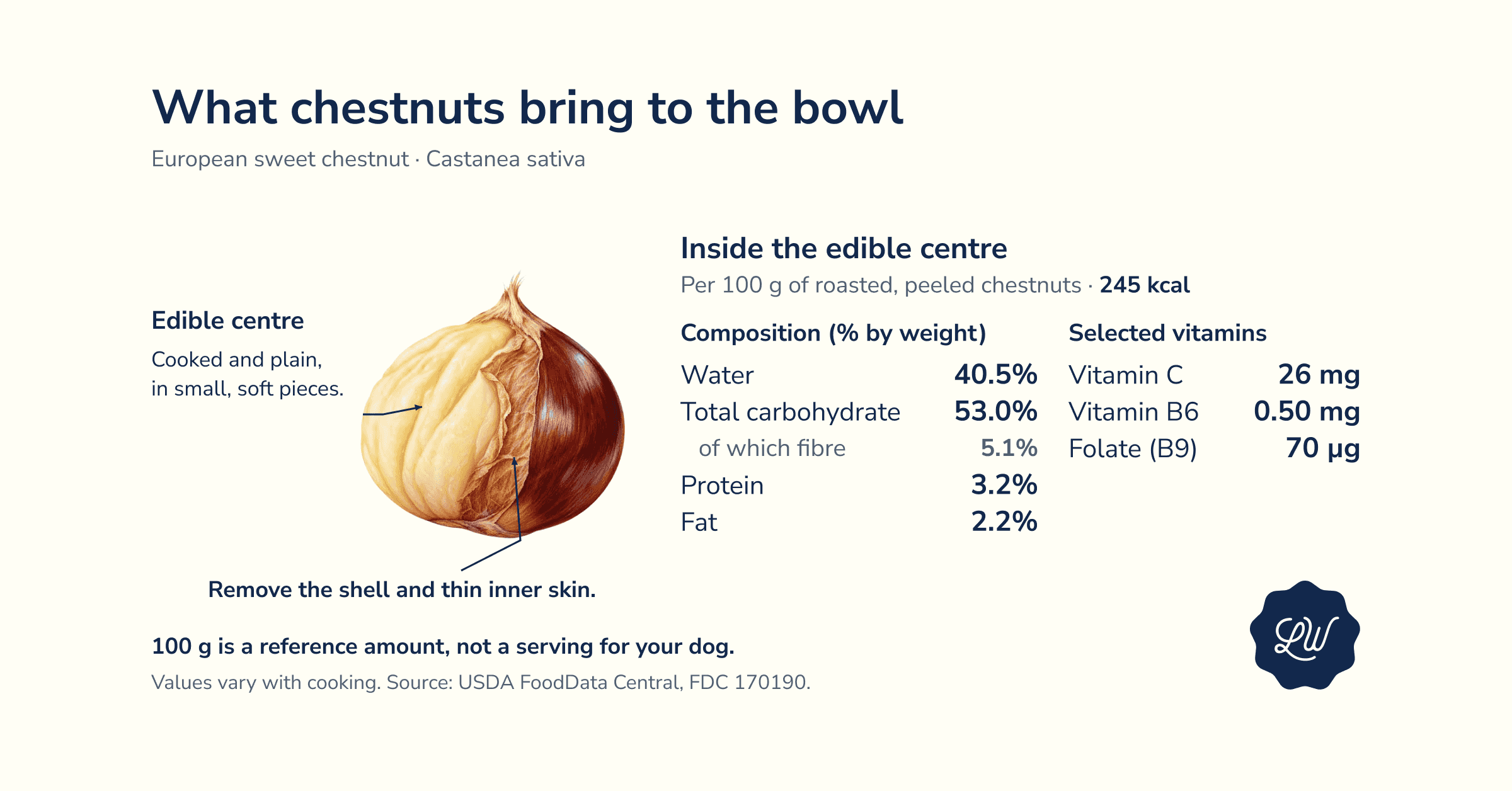
So, what exactly is a chestnut, and what is it made of?
At LOONAWELL, we look at ingredients with their nutritional purpose in mind. Chestnuts contribute energy and fibre, and can bring a different flavour and texture to a dog’s meal.
I like to crumble a little cooked, peeled chestnut over my dogs’ usual complete food, or offer a few soft pieces while I enjoy mine. It is a simple autumn pleasure we can share.
For a slightly more elaborate snack, try a little plain cottage cheese alongside it, if your dog tolerates dairy. Max and Luna love this combination!
Not all chestnuts are safe for dogs
Before we share, though, we need to be sure which chestnuts we have.
European sweet chestnuts, along with Chinese, Japanese and American chestnuts, belong to the botanical group Castanea and are edible. Horse chestnuts, also called conkers, belong to a different group. They are poisonous to dogs and people, even after cooking.
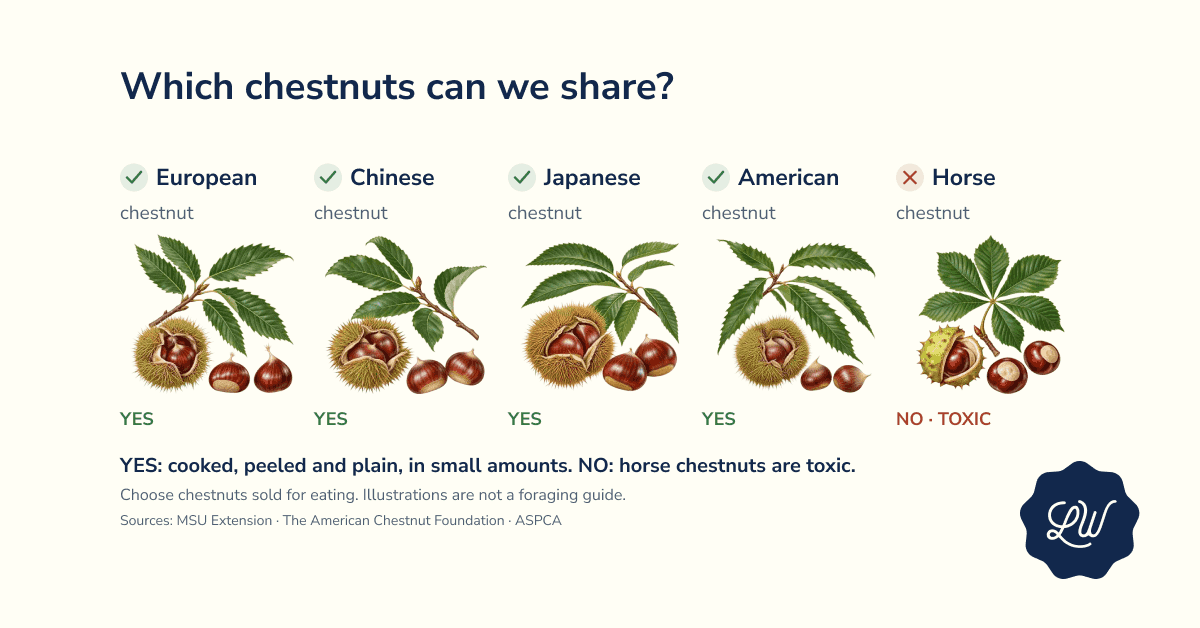
For your kitchen, choose chestnuts sold for eating. If you gather your own on an autumn walk, have them checked by someone with the right expertise. A shiny brown shell is not enough to go on.
If your dog eats a conker or an unidentified nut, contact your vet straight away, even if your dog seems well. Do not try to make them vomit yourself.
Preparing chestnuts to share
Once you have the right chestnuts, preparing them is straightforward. For my dogs, I always serve them cooked, with the flesh soft enough to break up easily. Raw chestnuts can be harder to digest, so I would leave those out of the dog’s bowl.
- Choose and score. Discard any mouldy or spoiled chestnuts. Carefully cut a cross through each shell before cooking, to let steam escape.
- Boil or roast. Simmer in plain water, starting to check after 15–20 minutes, or roast at 200°C (180°C fan) for around 30 minutes. The flesh should be soft all the way through; larger chestnuts may need longer.
- Peel and cool. Remove both the shell and the thin inner skin while the chestnuts are still comfortably warm. Let your dog’s portion cool fully before serving.
Plain, ready-cooked chestnuts are a handy shortcut, too. Check the ingredients and follow the pack instructions.
Once cooled, crumble, mash or cut your dog’s portion into small, soft pieces. Whole chestnuts can be a choking hazard, so this last little bit of preparation matters.
And what about a little seasoning?
If you would like to try a little variation, a tiny sprinkle of finely chopped fresh basil or thyme can add aroma. A tiny pinch of cinnamon, mixed thoroughly into the food, is another option.
Some familiar kitchen ingredients should stay out, however. Onion and chives, including their dried or powdered forms, can harm dogs. Leave out nutmeg, too, and skip hot spices such as chilli and cayenne, which can irritate their digestive tract. Check seasoning blends carefully.
There is no need for added butter, salt or sugar. Sweetened chestnut purées and marrons glacés are best kept for the human table.
How much is a little?
Start with a few soft crumbs and see how your dog gets on. The right amount depends on their size, diet and individual needs.
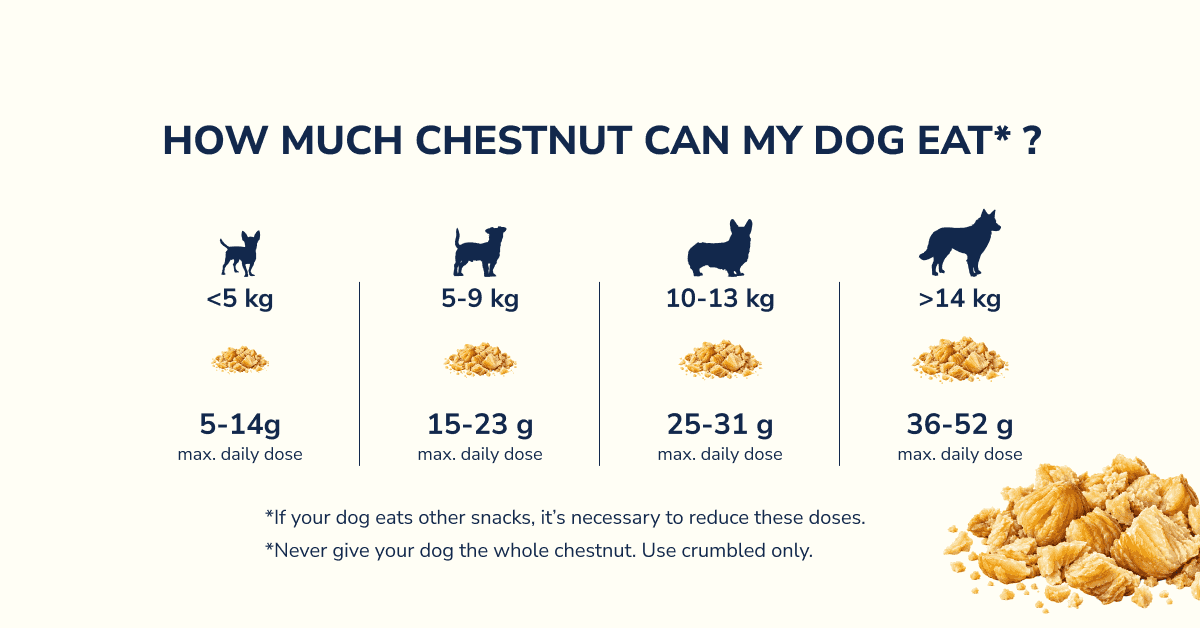
Those little extras do add up: 10 g of roasted chestnuts provides roughly 25 calories. Keep all treats and toppings combined below 10% of your dog’s daily calories, with their usual complete food providing the rest.
If your dog has a medical condition, dietary sensitivities or a prescribed diet, check with your veterinary team before introducing a new food.
The question that helped shape our cookbook
As a dog owner, I have lost count of the times I have Googled “Can my dog eat…?”
You may know the moment well: an ingredient in your hand, a dog at your feet, and one small question before you share.
That everyday question helped inspire a chapter in our LOONAWELL Cookbook: a guide to more than 250 ingredients, covering which can be shared with dogs, which to avoid, and what each brings in nutrition and flavour.
I wanted that information close at hand in the kitchen, whether I was checking something familiar or trying a new combination. I hope it gives you the same confidence to cook for your dog, and to enjoy the small pleasure of sharing something you have made.
Explore the LOONAWELL Cookbook
The LOONAWELL Cookbook 1st Edition
CHF. 112.00
This is not just a cookbook. It’s a scientific declaration of love for dogs. Created by the team behind LOONAWELL, this first-of-its-kind cookbook invites you to nourish your dog with the same thoughtfulness, quality, and joy you bring to your… Read More

FAQs
Can dogs eat roasted or boiled chestnuts?
Yes, edible sweet chestnuts can be shared in small amounts, cooked, peeled and plain. Let them cool, then crumble a little over your dog’s usual food. No butter, salt or seasoning needed.
Can dogs eat raw chestnuts?
No. I recommend cooking them first. Cooking softens the flesh, making it easier to break into small pieces. For my dogs, I keep the preparation simple: cook, peel, cool and crumble.
How much chestnut can I give my dog?
Start with a few soft crumbs. The right portion depends on your dog’s size, daily calorie needs and the other extras they enjoy. All treats and toppings combined should provide less than 10% of their daily calories. If your dog has a medical condition or prescribed diet, ask your veterinary team what fits.
Do I need to remove the chestnut’s shell and skin?
Yes. The part we want in the bowl is the soft flesh. Remove both the hard outer shell and the thin brown skin underneath, then crumble the chestnut into small pieces before serving.
What should I do if my dog eats a horse chestnut?
Horse chestnuts, also called conkers, are poisonous to dogs and can cause a gut blockage. Call your vet promptly, even if your dog seems well. Don’t wait for symptoms or try to make them vomit yourself.